
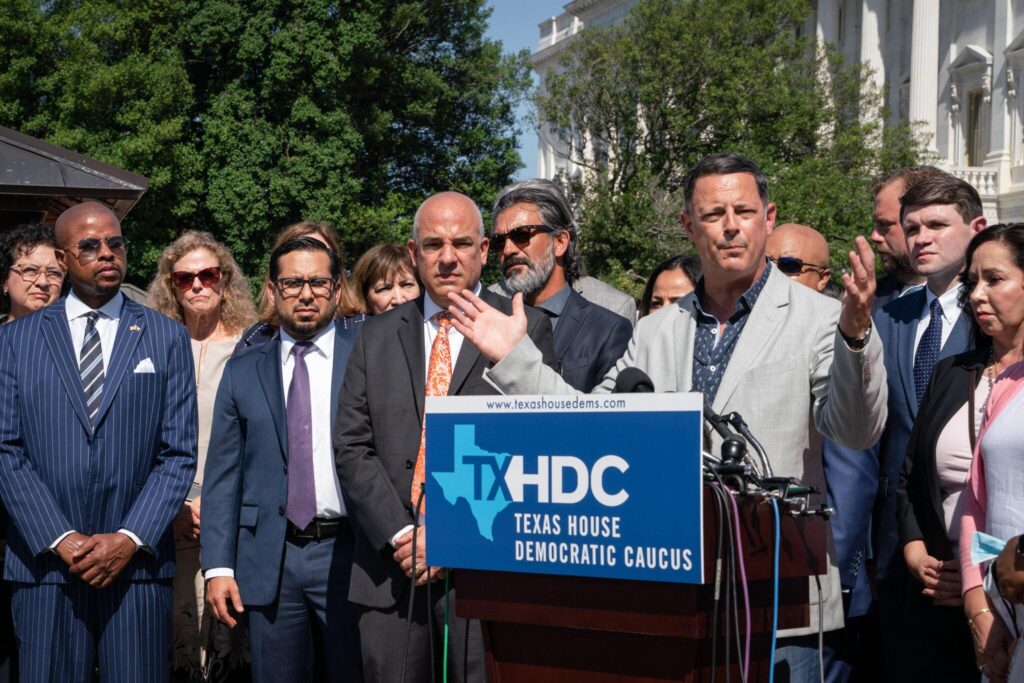
Texas Democrats Navigate New Political Terrain Amid GOP Redistricting
Analyzing the Effects of Republican-Led Redistricting on Texas Democratic Prospects
Following the recent redrawing of electoral districts by the Republican majority in Texas, Democratic leaders are facing a dramatically transformed political environment. Critics argue that the new maps are strategically designed to weaken Democratic voting strength by reshaping district boundaries to favor Republican candidates. This shift demands that Democrats rethink their campaign strategies, enhance voter engagement efforts, and reallocate resources to remain competitive in both state and federal contests.
Many districts have been restructured by combining historically Democratic neighborhoods with conservative-leaning suburbs or by stretching district lines to dilute Democratic voter concentration. This redistricting complicates efforts to energize the Democratic base and maintain previously secure seats.
Primary Challenges for Texas Democrats Post-Redistricting:
- Heightened concerns over voter suppression linked to new district configurations
- Necessity for intensified grassroots outreach in redefined electoral zones
- Increased reliance on digital platforms and precision-targeted advertising
- Risk of losing several formerly safe legislative seats
| District | Pre-Redistricting Political Lean | Post-Redistricting Political Lean | Change in Democratic Vote Share |
|---|---|---|---|
| District 10 | Democratic-leaning | Republican-leaning | -8% |
| District 23 | Competitive | Republican-leaning | -5% |
| District 35 | Strong Democratic | Moderate Democratic | -3% |
Despite these obstacles, Democratic officials remain optimistic. They are focusing on expanding voter registration drives and crafting issue-based messaging centered on healthcare reform, education improvements, and economic justice. The upcoming election cycle will be a critical test of the party’s ability to innovate and adapt amid what many describe as a politically engineered disadvantage.
Rebuilding Voter Coalitions in a Shifting Electoral Landscape
In response to the GOP’s comprehensive redistricting, Texas Democrats are recalibrating their approach to coalition-building. Understanding the evolving demographics, urban expansion, and the diverse priorities of communities now divided by new district lines is essential. The party is increasingly emphasizing inclusive platforms that address pressing concerns such as economic inequality, education access, public safety, and immigration reform—issues that resonate across the newly drawn districts.
Effective Coalition-Building Tactics:
- Grassroots Mobilization: Hosting community events and partnering with local leaders to foster genuine connections.
- Multicultural Partnerships: Collaborating with Hispanic, Black, and Asian-American organizations to unify historically marginalized voters.
- Data-Driven Digital Outreach: Leveraging analytics to identify persuadable voters and customize campaign messaging.
- Issue-Focused Communication: Promoting clear policy proposals on healthcare and infrastructure that align with voter priorities.
| District Type | Coalition Emphasis | Dominant Voter Groups |
|---|---|---|
| Urban | Economic Development & Education | Diverse Populations, Young Professionals |
| Suburban | Healthcare & Community Safety | Families, Moderate Electorate |
| Rural | Infrastructure Investment & Job Creation | Agricultural Workers, Older Residents |
Legal Battles and Advocacy to Challenge Redistricting Decisions
Texas Democrats have initiated multiple legal actions contesting the state’s new district maps, asserting that the redistricting process unfairly diminishes minority voting strength. Federal lawsuits argue that the redrawn boundaries violate the Voting Rights Act by fragmenting Democratic-leaning communities through tactics known as “cracking” and “packing.” These efforts are seen as attempts to cement Republican control via partisan gerrymandering.
Alongside litigation, Democrats are intensifying grassroots advocacy to raise awareness about voter disenfranchisement. Their initiatives include:
- Educational outreach to inform voters about the implications of the new district lines.
- Coalition formation with civil rights groups such as the NAACP and the Mexican American Legal Defense and Educational Fund (MALDEF).
- Organizing testimonies for congressional and judicial hearings to promote transparency in the redistricting process.
Though the path forward is challenging, these combined legal and community-driven efforts represent a comprehensive strategy to seek modifications or reversals of the maps before the next election.
Enhancing Party Cohesion and Grassroots Momentum
To strengthen unity amid a fractious political climate, Texas Democrats must foster ongoing dialogue between urban and rural factions, encouraging collaboration rather than competition. Establishing consistent communication channels—through forums and digital platforms—can reduce internal divisions and align the party around shared objectives. Leadership development programs targeting emerging grassroots activists will be vital to sustaining the party’s energy and responsiveness, empowering local communities to lead campaigns and policy advocacy.
Effective grassroots engagement requires tailored, on-the-ground strategies that reflect the unique demographics of each district. Investing in localized voter education and mobilizing volunteers through culturally sensitive outreach can increase participation and build trust. Utilizing data analytics to identify underrepresented voters will optimize resource deployment and refine messaging. Below is an overview of proven grassroots tactics that have succeeded in similarly diverse political environments:
| Engagement Strategy | Focus Area | Outcome |
|---|---|---|
| Community Forums | Addressing Local Concerns | High Voter Participation |
| Volunteer Network | Neighborhood Outreach | Enhanced Trust and Support |
| Social Media Initiatives | Youth Engagement | Increased Turnout |
| Multilingual Resources | Serving Diverse Populations | Improved Accessibility |
Looking Ahead: The Future of Texas Democratic Influence
As Texas Democrats grapple with the consequences of GOP-driven redistricting, their adaptability and strategic innovation will be pivotal in the months ahead. The altered political map presents formidable challenges but also highlights the shifting dynamics within Texas’s electorate. The party’s ability to respond effectively may well shape its role and impact in Texas politics for the foreseeable future. Spectrum News remains committed to tracking these developments and providing ongoing analysis of the state’s evolving political landscape.