
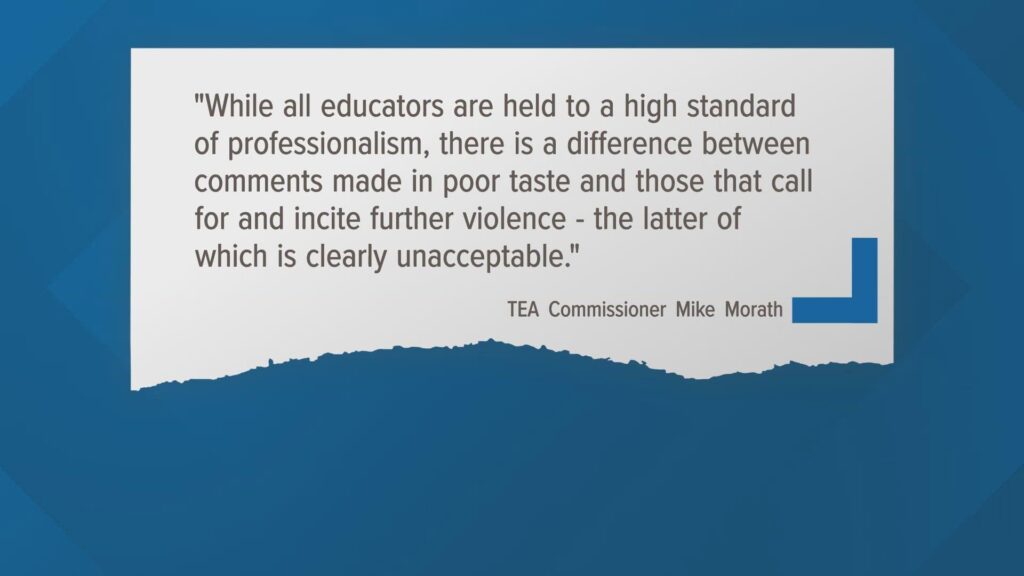
Texas Education Agency Reviews Complaints Over Educators’ Comments on Charlie Kirk
TEA Launches Investigation into Educator Complaints Linked to Charlie Kirk Remarks
The Texas Education Agency (TEA) is currently conducting a thorough investigation into roughly 180 complaints filed against teachers statewide concerning their public comments about conservative commentator Charlie Kirk. This influx of grievances underscores the escalating tensions around political discourse within Texas classrooms. The agency’s objective is to assess whether any educators violated professional standards or state educational policies through their remarks.
Critics contend that some teachers’ statements may have demonstrated political partiality or used language deemed inappropriate, potentially swaying students’ viewpoints in a divisive way. The TEA’s inquiry will include:
- Evaluating the context and substance of each complaint
- Interviewing educators, administrators, and other involved parties
- Deciding on disciplinary measures if any breaches are confirmed
| Type of Complaint | Number of Incidents |
|---|---|
| Allegations of Political Bias | 120 |
| Inappropriate Language Usage | 35 |
| Violation of Student Rights | 25 |
Social Media’s Role in Shaping Educator Conduct and Public Reaction
In today’s digital era, social media has become a critical arena where educators’ personal opinions often intersect with their professional identities. The recent examination of Texas teachers’ online comments about Charlie Kirk highlights how social media activity can rapidly escalate into formal complaints and disciplinary actions. Educators, traditionally seen as community role models, now face intensified scrutiny regarding their public expressions, both inside and outside the classroom.
Community responses to these incidents are deeply divided, mirroring broader societal polarization amplified by online platforms. As the TEA reviews these complaints, it must carefully balance protecting teachers’ free speech rights with maintaining public confidence and adherence to district policies. Common issues raised in the complaints include:
- Concerns about impartiality: Politically charged posts may undermine students’ trust in unbiased education.
- Preserving a safe learning environment: Controversial remarks risk heightening tensions among students, parents, and staff.
- Enforcement of social media guidelines: School districts increasingly incorporate digital conduct into professional standards.
| Complaint Type | Percentage of Total | Effect |
|---|---|---|
| Political Bias | 45% | Erosion of perceived neutrality |
| Harassment or Bullying | 25% | Creation of hostile classroom atmosphere |
| Breach of Social Media Policies | 20% | Possible disciplinary consequences |
| Other Issues | 10% | Miscellaneous concerns |
Exploring Political Discourse Within Educational Environments
Political discussions in schools often spark debates about the limits of free expression and the appropriateness of such content in academic settings. The TEA’s ongoing probe into complaints about teachers’ remarks on Charlie Kirk exemplifies the delicate balance between educators’ rights to express opinions and the community’s expectations for neutrality in classrooms.
Critical factors in this conversation include:
- Striking a balance between academic freedom and unbiased instruction.
- Considering how political commentary affects inclusivity and respect for diversity among students.
- Defining the role of school districts and state authorities in regulating acceptable speech.
- Understanding the potential repercussions educators face when addressing sensitive political topics.
| Group | Primary Concerns | Possible Outcomes |
|---|---|---|
| Educators | Right to share political views | Risk of disciplinary measures or damage to reputation |
| Students | Access to diverse viewpoints | Feelings of inclusion or alienation depending on context |
| Parents and Community | Concerns about political indoctrination | Calls for increased oversight and policy changes |
| Policy Makers | Balancing constitutional rights with educational standards | Legislative actions affecting curriculum and conduct rules |
Guidelines for Upholding Professionalism During Public Disputes
In an era of intense public scrutiny, educators must clearly separate their personal beliefs from their professional duties. It is vital for teachers to approach public discussions thoughtfully, ensuring their communication preserves their role as neutral facilitators of learning. Employing a cautious and respectful tone can help prevent misunderstandings and maintain trust among students, families, and the community.
Recommended best practices include:
- Valuing diverse viewpoints and steering clear of divisive or partisan language in public forums.
- Consulting with school leadership or reviewing district policies before making public statements on contentious topics.
- Centering conversations on educational material rather than personal political beliefs.
School districts can further assist educators by establishing clear guidelines and offering training focused on professional conduct in the digital age. The following table outlines effective strategies for maintaining professionalism amid controversy:
| Approach | Execution | Expected Benefit |
|---|---|---|
| Clear Communication Guidelines | District policies on social media and public engagement | Minimizes risk of misinterpretation and complaints |
| Professional Development Programs | Workshops on cultural competence and digital literacy | Enhances awareness and fosters empathy |
| Supportive Administrative Leadership | Accessible resources for guidance and conflict resolution | Encourages a respectful and inclusive school culture |
Conclusion
The Texas Education Agency’s ongoing review of over 180 complaints related to teachers’ comments about Charlie Kirk is a pivotal moment for the state’s education system. The investigation’s outcome will likely influence how political expression is managed within classrooms and shape future policies balancing educators’ free speech rights with professional standards. Stakeholders statewide remain attentive as this complex issue unfolds, with updates to be provided as new information becomes available.